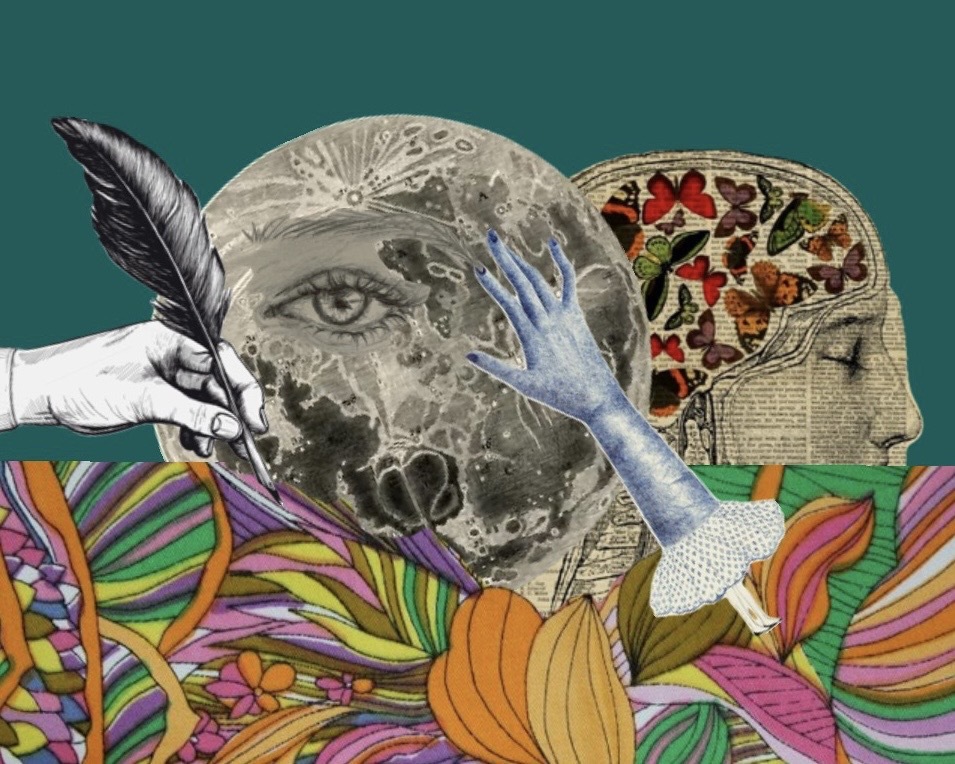
There exist many branches of holistic healing method, spanning from homeopathy and accupancture all the way up to Aurveyda and Reiki. Unlike the atomistic approach of traditional medicine, holistic treatment philosophy is based on the belief that in order to understand and cure health conditions we mustn’t focus on separate parts of the brain, body, or mind, instead, we ought to regard them as intrinsically interconnected, thus demanding equal consideration and attention. Art therapy is an example of one such treatment. It features work with primarily visual mediums such as painting and drawing that incorporates a diversity of craft materials, cultivating an interactive, free-spirited, playful environment for patients to exercise their creativity. This relatively recent branch of alternative psychotherapy, formally introduced by a British artist and educator Adrian Hill in 1942, is set out to explore the healing properties of making art.
While considering the question of how and why art therapy came to be, we may begin to ponder its relevance and validity from the starting point of looking at the nature of art. The habit of art-making has followed humanity starting from its very conception as an instrument of documentation, storytelling, worship, and expression for populations as early as the Neanderthals. This may put the concept of artistic creation into natural perspective as being something characteristically and distinctly human, an organic behavioural disposition present within our design. We, culturally and historically, find that there is a certain mystical layer to the artistic pursuit which lies in our perception of it as something inherently reflecting our inner, possibly even unconscious, world. The action of creating involves a symphonious play between notions of mysterious duality: mental and physical, three-dimensional and four-dimensional. We may view art as all-encompassing, seeing that it requires feeling, the internal, and movement, the external, to come together as tools of creative production. Subjective phenomenal properties of the human mind, that psychological treatment and psychiatry in general, are very much concerned with, are thought to serve as the primary impulse behind the artistic process, which makes art a sort of looking glass into our personal conscious reality. Professionally referred to as inner imaging, this mirroring aspect of art comes into one of the key components of the treatment in question. The patient’s drawings and paintings, commonly on the topic of their experiences and identity, are interpreted in the relevant context and used as means to identify and deeper understand what they are going through mentally both by the therapist and the individual.
Recent psychiatrical research on the subject involves an emphasis on art therapy being most effective as a complementary treatment to more conventional psychotherapeutic and pharmacotherapeutic approaches. As it is a fairly new field of study, the effects of art therapy, which are tricky to track and measure largely due to the treatment being implemented along with various others, require further scientific consideration. However, no research denies the highly engaging qualities of the activity encouraging self-reflection and awareness. There are many instances where holistic methods of treatment are somewhat looked down on by scientists, however, art therapy is widely well-recognized and offered to patients from all kinds of social and medical backgrounds, in the popular complimentary style mentioned above. With the rise general public’s attention to holistic medicine, the domain of art therapy is ever-expanding which gives hope for further scientific research development within it.